RUDRANATH WITH KALPESHWAR 4N/5D
 Uttarakhand
All About It
- 5 Days 4 Nights
- 15 Slots
- For 12+ years
The Garhwal Himalayas hold a sacred secret in the form of the Panch Keda five shrines where different parts of Lord Shiva’s divine bull form manifested. While Rudranath captures the mystery of the Face The Rudranath Mahadev, Kalpeshwar Mahadev completes the spiritual circuit with its own unique, rugged charm.
Together, these two shrines represent the most raw and untouched aspects of the Himalayan pilgrimage.
Rudranath: The Mystical 'Ekanan'
The Shrine of the Face
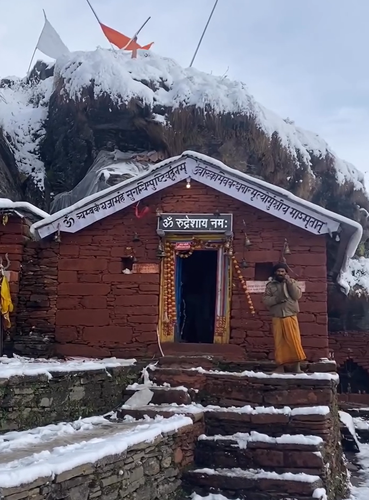
Tucked away in a remote rock cave, Rudranath is arguably the most challenging and secluded temple of the Panch Kedar. It is the only place on Earth where Lord Shiva is worshipped in his 'Ekanan' form (The Human Face).
- The Legend: After the Kurukshetra war, as the Pandavas sought atonement, Shiva dived into the earth to elude them. His Mukh (Face) emerged here.
- The Experience: The trek is a grueling yet ethereal journey through the "Pitradhar" ridges and vast alpine meadows (Bugyals). Pilgrims witness a natural rock formation that carries a serene, meditative expression, echoing with ancient energy.
Kalpeshwar: The Eternal 'Jata'
The Shrine of the matted Locks
Kalpeshwar Mahadev is the Fifth Kedar and holds a distinction of its own. It is the only temple among the five that remains open throughout the year, even when the others are buried under deep winter snow.
- The Legend: At this spot, the Jata (Matted Hair) of Lord Shiva appeared. It is said that the sage Arghya performed deep penance here and created the Kalpavriksha (wish-fulfilling tree), giving the place its name.
- The Form: Inside a small stone cave, the naturally occurring rock resembles the tangled locks of a yogi. Water trickles down the cave walls, considered holy and medicinal by the locals.
- The Vibe: Unlike the high-altitude meadows of Rudranath, Kalpeshwar is nestled in the lush Urgam Valley. It is surrounded by apple orchards, terraced fields, and the dense greenery of the Alaknanda river basin.
Highlights
Temple Highlights
The Divine Manifestations: * Rudranath: Worship of the 'Ekanan' (The Human Face), the most serene and hauntingly beautiful form of Lord Shiva.
Kalpeshwar: Worship of the 'Jata' (Matted Locks), symbolizing the wild and untamed energy of the ascetic Lord.
Unique Status: * Rudranath is the most secluded and physically demanding of the Panch Kedar.
Kalpeshwar is the only temple in the circuit that remains accessible all year round, never closing for the winter.
Natural Architecture: Both shrines are housed within natural rock caves, emphasizing a raw connection to the earth rather than man-made grandeur.
Trek & Terrain Highlights
The "Vaitarani" Experience: At Rudranath, pilgrims bathe in the Narad Kund, overlooking the peaks of Nanda Devi, Trishul, and Nanda Ghunti.
The Bugyals of Rudranath: The trail crosses the Panar and Pitradhar meadows, offering some of the most expansive alpine views in the Garhwal region.
The Urgam Valley Charm: The journey to Kalpeshwar takes you through the lush, terraced fields of the Urgam Valley, famous for its apple orchards and local "Jhangora" (millets).
Kalpavriksha Tree: At Kalpeshwar, you can witness the ancient tree believed to be the wish-fulfilling tree of the gods.
Spiritual Significance
Pandava Legacy: Both sites are integral to the legend of the Pandavas seeking redemption for the "Gotra Hatya" (killing of kin) after the Great War.
Ancient Energy: Rudranath is often described by trekkers as having a "vibrational" silence, while Kalpeshwar is celebrated for its deep, grounding peace.
The Final Steps: Visiting these two completes the northern and southern-most points of the sacred Kedar pilgrimage, balancing the highest altitude mystery with valley-level devotion.



The Scenic Drive: Kickstart your TravelMite adventure early morning from Rishikesh. A beautiful 8-9 hour mountain drive (approx. 210 km) takes you through the heart of Garhwal, passing through the holy confluences of Devprayag and Rudraprayag.
Base Camp Arrival: Reach Sagar Village, the gateway to the mystical Rudranath Temple.
Check-in & Relax: Settle into your comfortable homestay/guest house and recharge for the trek ahead.
Evening Vibes: Take a slow walk through the village, interact with the locals, and soak in the raw Himalayan culture.
Night Prep: A brief orientation by your TravelMite Trip Captain about the trek route and safety, followed by an overnight stay at Sagar.


Morning Fuel: Enjoy a fresh Himalayan breakfast at Sagar Village before hitting the trail early to beat the mountain sun.
The Ascent: Start your 10-12 km trek through dense rhododendron and oak forests. The trail is steep, but the refreshing mountain air and chirping of the Himalayan Monal keep you going.
Lunch with a View: Take a break at a scenic spot for your TravelMite Packed Lunch amidst the wilderness.
Arrival at Lwiti Bugyal: Reach the stunning alpine meadows of Lwiti. Watch the forest open up into vast, rolling green carpets with the mighty Himalayas staring back at you.
Campsite Vibes: Settle into your tents, grab a hot cup of tea, and witness a legendary sunset over the Chaukhamba peaks.
Starlit Night: Enjoy a warm dinner and an overnight stay at the Lwiti Bugyal Campsite under a blanket of a billion stars.
Morning Bliss: Wake up to the golden sun hitting the Nanda Devi peaks. Fuel up with a warm breakfast at the campsite before the final push.
The Ridge Walk: Today's trek (approx. 8-9 km) is a mix of steep climbs and beautiful ridge walks. You’ll cross the famous Panar Bugyal, where the forest ends and the endless Himalayan meadows begin.
The Sacred Darshan: Reach the ancient Rudranath Temple (3,600m). Feel the divine energy as you stand before the rock-cut cave temple of Lord Shiva—the only place where his Face (Mukh) is worshipped.
Spiritual Reflection: Take your time for blessings, explore the temple premises, and take a holy dip in the nearby Vaitarani Kund. Spend the evening in quiet reflection as the temple bells echo through the mountains.
Night at the Feet of Shiva: Settle into your TravelMite Camps near the temple. Enjoy a simple, hot mountain dinner under a sky full of stars.
Overnight: Camping at Rudranath.
The Divine Sunrise: Wake up early to witness the first rays of sun hitting the Nanda Devi and Trishul peaks from the temple. Experience the serene morning Aarti one last time before starting your journey back.
The Long Descent: After a hearty mountain breakfast, begin your trek back (approx. 18-20 km) towards Sagar Village. While the descent is easier on the lungs, it’s a test for the knees—take it slow and enjoy the changing landscapes from meadows to dense oak forests.
Lunch in the Wild: Stop at Panar or Lwiti Bugyal for a final packed lunch amidst the vast green carpets.
Back to Base: Reach Sagar Village/Chamoli by late afternoon or evening. The feeling of completing one of the toughest Panch Kedar treks is unmatched!
Celebration Dinner: Settle back into your homestay/guest house. Enjoy a special TravelMite Celebration Dinner with the team, sharing stories and photos of the 'Divine Face'.
Rest: Overnight stay at Chamoli.

Final Mountain Breakfast: Wake up to the peaceful vibes of Sagar Village one last time. Enjoy a hearty breakfast before bidding farewell to the local hosts who made your stay special.
Spiritual Detour to Kalpeshwar: From Sagar / Chamoli, begin your drive towards the serene Urgam Valley. Visit the sacred Kalpeshwar Temple, one of the revered Panch Kedar shrines. Spend some peaceful moments in darshan amidst the tranquil Himalayan surroundings.
The Return Drive: After darshan, continue your 8–9 hour drive back to Rishikesh. As you wind down the mountain roads, you’ll trace the beautiful Alaknanda River and Mandakini River, passing through familiar towns like Chamoli and Karnaprayag.
Arrival at Rishikesh: Reach the "Yoga Capital" by late afternoon or early evening. The sight of the holy Ganges marks the perfect transition from the high-altitude wilderness back to civilization.
Free Time & Souvenirs: Take some time to freshen up. If your energy allows, enjoy a café by the riverside or pick up local Himalayan handicrafts as souvenirs of your Rudranath Odyssey.
End of Adventure: The trip concludes here with a bag full of memories, a soul full of peace, and the pride of completing one of the most sacred treks in Uttarakhand.
Inclusions
We believe in quality, even in the remotest corners of the Himalayas.
Hand-Picked Accommodations: Enjoy stays in comfortable, well-equipped hotels and resorts as per your selected package. Every stay is personally vetted by the TravelMite Team for hygiene and hospitality.
Important Note on Rudranath Stay: Please note that Rudranath is a remote high-altitude shrine. Due to its secluded location and ecological sensitivity, there are strictly limited stay options (Basic Guest Houses/Alpine Tents). We have hand-picked the best available options to ensure a clean and safe experience despite the rugged terrain.
Seamless Transportation: Round-trip transfers from the designated departure point in dedicated, sanitized vehicles. Includes all sightseeing and station/airport transfers as per the itinerary.
Himalayan Meals: Freshly prepared daily breakfast and dinner (MAP Plan). Note: Special dietary requirements (Veg/Jain) can be accommodated with prior notice.
Sightseeing & Activities: Guided tours, entrance fees to specified attractions, and participation in curated experiences like high-altitude hikes and local workshops.
TravelMite Trip Captain: An experienced group leader to ensure smooth coordination, safety, and a fun group vibe throughout the journey.
Knowledgeable Local Guides: Expert guides who share deep insights into the destination's rich culture, myths, and customs.
24/7 Support: Dedicated on-call assistance for any travel-related emergencies or queries.
Exclusions
To maintain complete transparency and ensure a hassle-free #Travessed experience.
Airfare & Rail: Round-trip flights or train tickets to and from the starting point are not included in the package price.
Permits & Documentation: Costs for personal forest permits, special forest entry fees (if any), and travel documents are the responsibility of the traveler.
Personal Expenses: Expenses of a personal nature such as laundry, telephone calls, room service, and personal shopping.
Additional Meals: Meals not specified in the itinerary. All snacks, mineral water, and beverages between meals are excluded.
Optional Activities: Costs for any activities, pony/mule rides, palanquins (palki), or excursions not mentioned in the itinerary.
Tipping & Gratuities: Tips for guides, drivers, and service staff are not included and are at the discretion of the traveler.
Medical & Insurance: Costs related to specialized medical treatment, personal medication, or emergency evacuations. TravelMite provides only basic First Aid.
Deviations: Any transportation costs incurred due to deviating from the planned itinerary or additional local travel not specified.
Personal Belongings: Guests are solely responsible for the safety of their luggage and valuables. TravelMite is not liable for lost, stolen, or damaged items.
Unforeseen Costs: Any additional expenses arising due to landslides, roadblocks, strikes, or extreme weather conditions.
Things to Carry
1. Wearing layers is the mantra in the mountains. Layers give you maximum protection from all elements. You will need at least 5 warm layers (Insulin layers). You will need at least 1 pair of inner thermals, 2 light fleece layers, 1 light sweater, and 1 padded jacket. Ensure your padded jacket has a hood as well. A minimum of one pair and a maximum of two pairs of trek pants should suffice for this trek. Wear one pair and carry one just in case it rains/snows. Trek pants with zippered cut offs at the thighs are very suitable for treks. Also, choose quick-dry pants over cotton
Sunglasses - Sunglasses are to prevent snow blindness. A small overexposure to direct sunlight on snow can lead to snow blindness (about a half hour’s exposure). That’s because fallen snow is like thousands of mirrors that reflect direct UV rays. So you need sunglasses with UV protection.
Buying Tip: Try getting sunglasses that wrap around instead of those that have openings on the side. Even peripheral UV ray exposure is not a good idea.
2. Sun Cap
3. Synthetic Hand Gloves - Get synthetic hand gloves that have waterproofing on the outside and a padded lining on the inside. If you find the combination difficult to get (not likely), wear a tight-fitting fleece hand glove inside a synthetic hand glove. Hand gloves are mandatory on this trek.
4. Woollen Cap - a woollen head cap that covers your head and ears is absolutely essential.
5. Socks - Apart from three to four pairs of sports socks, take a pair of woolen socks. Sports socks give you cushioning plus warmth. Again the mantra is to wear synthetic socks or at least a synthetic blend. Cotton socks soak in water and sweat. They are very hard to dry. As for woolen socks, they help you to keep warm and snug in the night. If you cannot get woolen socks, wearing two sports socks serves the purpose as well.
6.Power Bank
7. Thermos for water
8. Medication (As per medical conditions if any and is subscribed by a doctor)
9.Extra cover for your electronic gear items/Valuables.
10. Quick Dry Towel/Towel
11. Torch/headlamp
12. A tiffin box with a spoon for packed lunch, we try reduced usage of plastic/paper as much as possible
13. Poncho/Rain Cover
14. Do not leave plastic wrappers(chips,chocolates etc) behind while on Trek and yes! don't forget your "Mask" of course!
HOW TO REACH
Kickstart your Rudranath journey from our designated pickup point: The 60s Cafe, Tapovan, Rishikesh
By Train: The Scenic Rail Route
- The nearest railway station is Rishikesh (RKSH) or Yog Nagari Rishikesh (YNRK).
- From the station, you can easily find private autos or public buses to reach Tapovan.
- Ask for "The 60s Cafe" near the Laxman Jhula area.
By Road: The Classic Delhi-Rishikesh Drive
- The distance from Delhi to Rishikesh is approximately 251 km (6-7 hours).
- Regular AC/Volvo buses operate from ISBT Kashmiri Gate or Majnu ka Tilla.
- Once you deboard at the Rishikesh bus stand, take a local auto to our pickup point at The 60s Cafe, Tapovan.
By Air: The Fast Track
- Fly into Jolly Grant Airport (DED), Dehradun, which is well-connected with major cities like Delhi, Mumbai, and Bangalore.
- The airport is just 21 km (approx. 45 mins) from Rishikesh.
- You can hire a pre-paid taxi or a cab from the airport directly to Tapovan, Rishikesh, to start your #Travessed adventure.
TravelMite Pick-up Point Details:
- Location: The 60s Cafe (Delmar/Green Hills), Tapovan, Rishikesh.
- Reporting Time: Early morning (as specified in your booking voucher).
Cancelation policy
1. Booking & Payment Terms 2. Batch Operations & Group Size 3. Cancellation Procedure 4. Force Majeure & Unforeseen Circumstances 5. Natural Calamity & Voucher Policy Pre-Departure Cancellation: If a trip is cancelled by TravelMite before departure due to a natural calamity (earthquake, heavy snowfall, etc.) or unforeseen circumstances: Activity Cancellations: Individual activities cancelled due to uncontrollable events are non-refundable. 6. Liability & Safety 7. Cancellation & Refund:TravelMite: Cancellation, Refund & Liability Policy
Frequent Questions
About Rudranath Temple?
Rudranath is a Hindu pilgrimage site located in the Chamoli district of Uttarakhand, India. It is one of the Panch Kedar, a group of five sacred temples of Lord Shiva in the Himalayas.
How can I reach Rudranath?
The trek to Rudranath starts from the village of Sagar in the Chamoli district of Uttarakhand. The nearest airport is Jolly Grant Airport in Dehradun, and the nearest railway station is Rishikesh. From there, one can take a taxi or a bus to reach Sagar.
What is the best time to visit Rudranath?
The best time to visit Rudranath is from May to June and September to October. During these months, the weather is pleasant, and the trekking routes are accessible.
What is the distance of the trek to Rudranath?
The trek to Rudranath is around 20 km from the village of Sagar. It takes around 3-4 days to complete the trek.
Is the trek to Rudranath difficult?
The trek to Rudranath is considered to be moderate to difficult. The trek involves a steep ascent and descent, and the route can be slippery during monsoon season. It is recommended to have prior trekking experience and be physically fit to undertake this trek.
What is the significance of Rudranath?
Rudranath is one of the Panch Kedar and is believed to be the place where Lord Shiva appeared in the form of a face. The temple at Rudranath is dedicated to Lord Shiva and is considered to be a holy site for Hindu pilgrims.
What are the accommodation options available at Rudranath?
There are limited accommodation options available at Rudranath, including guesthouses and campsites. It is recommended to carry your camping equipment and food supplies during the trek.
Are there any medical facilities available at Rudranath?
There are no medical facilities available at Rudranath. It is recommended to carry a first aid kit and any necessary medications during the trek.
What are the other nearby attractions that I can visit along with Rudranath?
Other nearby attractions that one can visit along with Rudranath include the Panch Kedar temples of Tungnath, Kedarnath, Madhyamaheshwar, and Kalpeshwar. The Nanda Devi National Park and the Valley of Flowers National Park are also popular tourist destinations nearby.
Is Rudranath trek difficult?
The Rudranath trek in Uttarakhand, India can be moderately difficult due to the altitude and rugged terrain, but it is considered a doable trek for most fit and experienced trekkers.
The trek involves a total distance of around 20 km and is usually completed in 3-4 days. The trek starts from the village of Sagar and passes through dense forests, meadows, and steep climbs before reaching the Rudranath temple, which is located at an altitude of 3,600 meters. The final ascent to the temple can be challenging as it involves steep and rocky terrain.
The trek also involves camping in the mountains, which requires carrying all necessary equipment and supplies. Trekkers need to be physically fit and have some prior trekking experience to complete the Rudranath trek.
It's important to note that weather conditions can also impact the difficulty of the trek. It's best to plan the trek during the summer months when the weather is favorable and the trails are less prone to landslides and other hazards.
More From TravelMite

TravelMite
Company Name: company name
Read More